From France and Romania to Greece: Our Volunteers Experience Working in a Kindergarten

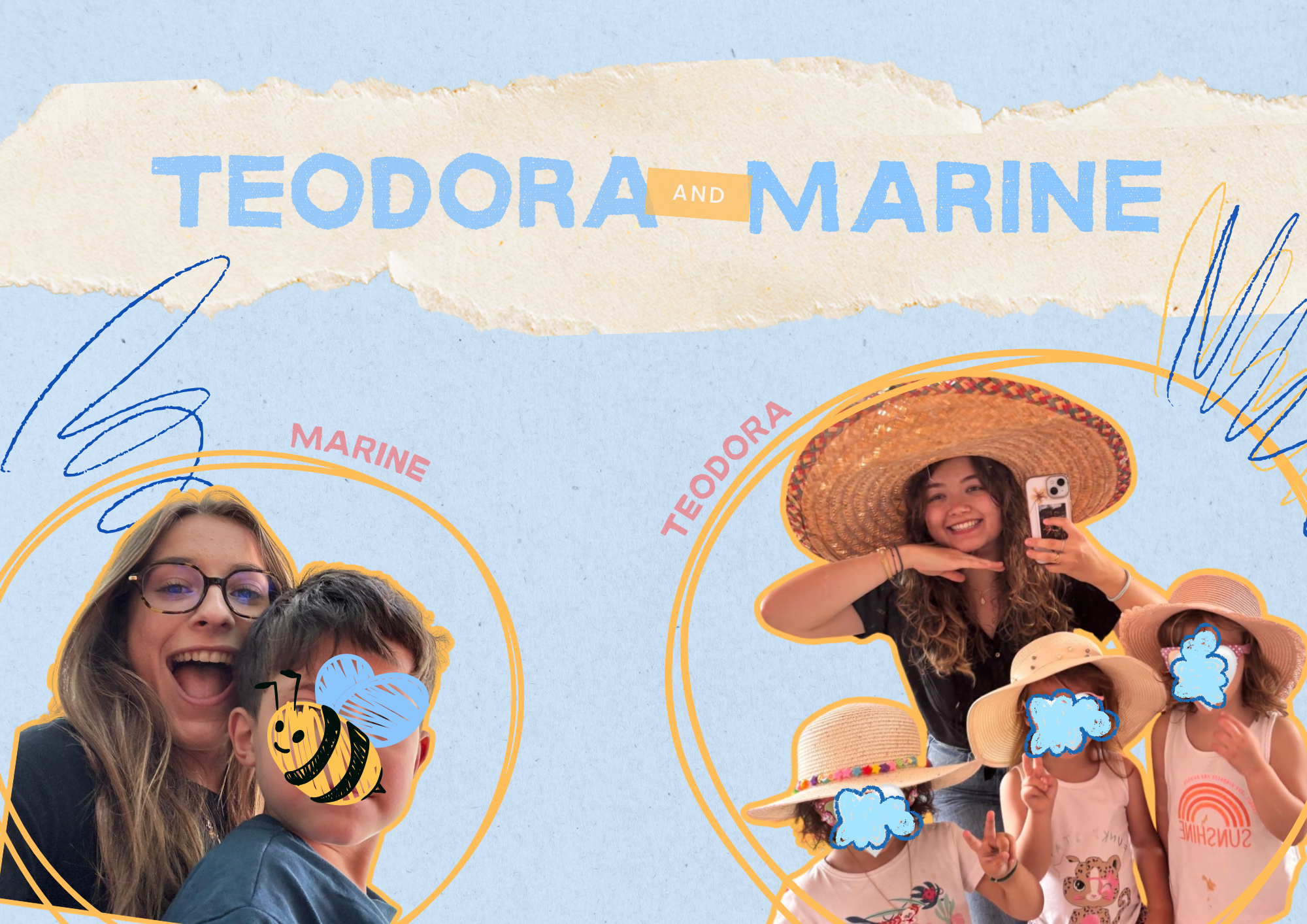
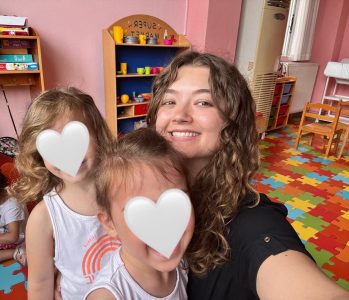
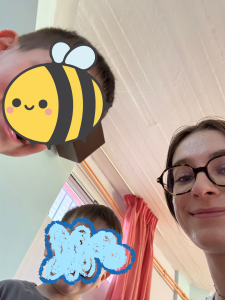
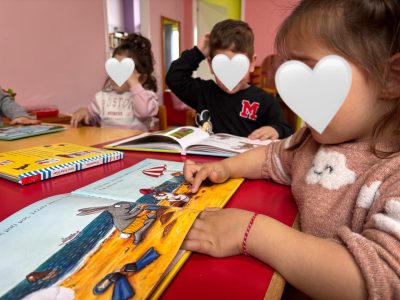
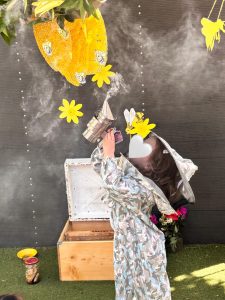
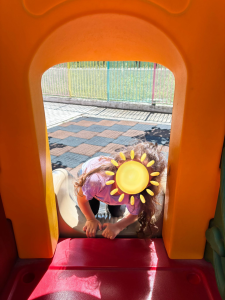
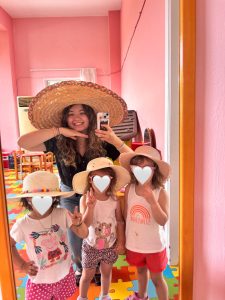
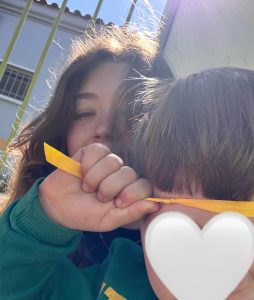
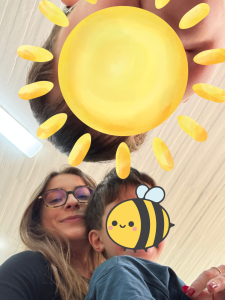
Moving abroad can be both exciting and challenging, especially when it is your first long-term international experience. Through our European Solidarity Corps project, volunteers have the opportunity to develop valuable skills and contribute to local communities. In this interview, Marine and Teodora, French and Romanian participants, share their experience as kindergarten volunteers in Greece, working with young children, adapting to a new environment, discovering a new culture and growing both personally and professionally.
What made you decide to leave Romania to come and volunteer in a Greek kindergarten for 6 months?
TEODORA – I have wanted to do an ESC project ever since high school, but things didn’t fall into place until 6 years later! After finishing my bachelor’s studies, I wanted to travel and work abroad for a while, experiencing other cultures, and I remembered my ESC dream from years ago. The Greece project with Orfeas was among the first ones that popped up when I was looking for opportunities on the ESC page. I have always loved working with kids and I’m a big fan of Greece and the Greek language, so it was a match made in heaven! I sent my CV, had an interview and a month later I was on my way to Xylokastro ☺️ I did not need much convincing, and it’s turned out to be one of the best decisions that I have ever made!
MARINE – I decided to leave France and come here because I wanted to meet new people and improve my English. It was also an opportunity for me to step out of my comfort zone once again, living in a new country for several months for the very first time, and thus discover a new culture. But above all, it was an excellent way to work with children and get to know them a little better.
What was your very first impression of Greece when you arrived? Was it like you expected?
TEODORA – As I am from a fellow Balkan country and I had visited Greece and had Greek friends before, for me there was no big culture shock. Except for the lack of crossroads! But nowadays I’m a pro at crossing the street with much courage and a prayer ☺️
My very first impression was that the scenery is simply gorgeous and that Greeks do, in fact, embody the philotimo (φιλότιμο) that best describes them. They received me with open arms, always with a smile and the openness to connection and conversation (as much as my extremely broken Greek allows). So, yes, Greece was just as I expected and even more!
MARINE – The first week after I arrived, I was truly captivated by this little village. When I applied, I was looking for a quiet spot, close to nature and the sea, and that’s exactly what I found. I couldn’t have dreamed of a better place for this volunteer work.
What does your typical day look like for you at the kindergarten?
TEODORA – I commute to work (a journey of around 1 hour, by bus and then bike) and so, my day starts at 6:30am. Sometimes, I even have the neighbour’s rooster as an alarm clock! But I’ve quickly grown to be a morning person, and there is something so serene about Xylokastro at that time in the morning (besides the rooster, of course ☺️).
So, work starts at around 8:30am, and it finishes at 1pm, when I have to leave to catch the bus home. When I arrive, I am first and foremost greeted by a lot of cute little voices that tell me καλημέρα! And then the same cute little voices ask for hugs, while at the same time, they are eager to tell me about anything and everything and to show me their new shoes (and yes, all of this is in Greek ☺️). This is my very favourite part of the day and what I am looking forward to during the weekends!
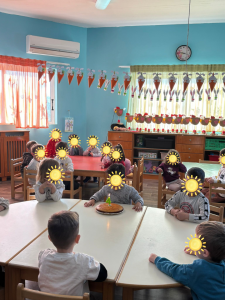
After the morning routine (which consists of gathering in a circle, discussing the day’s plans with the kiddos, dancing etc), we have breakfast. The school’s cook is amazing and every day I feel like I am eating at a restaurant.
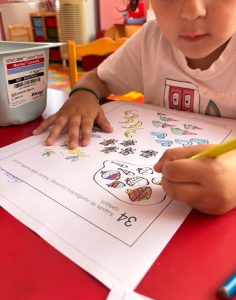
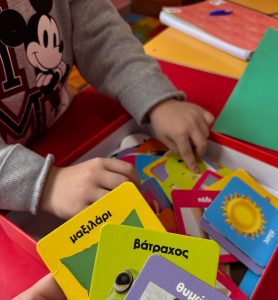
After breakfast, my coordinator tells me what we will do that day, and this changes based on the kindergarten’s needs. I love how dynamic working here is, you are truly never bored! Some days I colour and cut and glue an infinite number of patterns for the birthday cards, other days I help with the lessons that the kids have (when they are the ones to colour and cut and glue haha), and other days I can even help with admin work on the computer. But it is most likely that I will do a bit of all these things (plus playing with the kids as much as possible).
After lunch, we usually go outside and I help with supervising the kids. This is usually when I play with them the most and when they tell me funny stories or even serenade me ☺️. The time passes quickly and poof! I have to tell them that I’m going home – but not before one last quick game and more hugs!
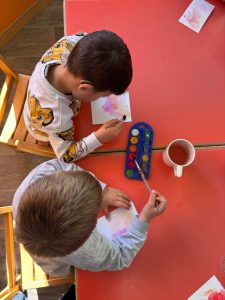
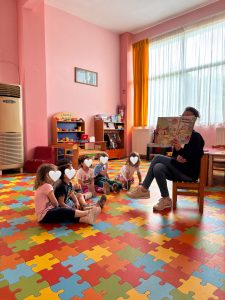
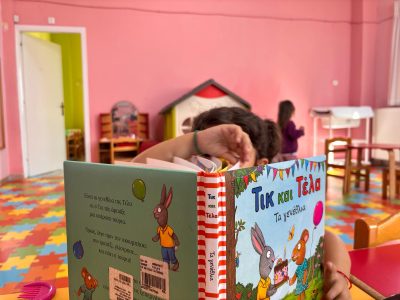
MARINE – The days are all pretty much the same. Here’s how a morning with the children unfolds: around 8:30, I arrive at the kindergarten. Some children are already there, others continue to arrive until around 9:10. Then there’s breakfast until about 9:40, where I help the teachers serve the children. Next comes diaper changing. Then it’s “lesson” time, where the teachers read them stories, or the children sing or talk about their weekend. Around 10:10, the little ones do coloring or painting. Generally, when the weather is nice, we go outside around 11:00 to play until noon. Then we go back inside, wash the children’s hands, serve them lunch, and sometimes help them if they need it. Around 12:40, when everyone has finished, we either watch TV or play with building blocks before they go home. I leave the kindergarten around 1:10/1:15 PM.
How do you manage the language barrier with the kids?
TEODORA – In the beginning it was a bit more complicated, and I relied a lot on the teachers’ help. I was very fortunate to have a coordinator that speaks great English. Still, the vocabulary is pretty straightforward, and you pick it up quite fast – at least the basic words needed to understand when a kid needs help with something or words food-related. Oh, and the colours! You learn the colours after the first few weeks, without any effort, as they are used during every lesson!
MARINE – I communicate with the children primarily using hand gestures. From the moment I arrived, they understood that I didn’t speak the same language, and I have the impression that they make it easy for me to understand what they’re asking, especially through gestures. I’ve also learned some vocabulary since I started volunteering, so most of the time I know what they want or what they’re trying to tell me, because I’ve gotten used to it.
What has been the most rewarding moment with the children so far? And the hardest part?
TEODORA – As I said before, the most rewarding moment is getting to start my day with the kids joyfully greeting me. The bond that we can create with them is so special, and it is forged quite easily – kids simply need you to truly care and pay attention to their needs and to what they are saying (even if, at best, you only understand half of it ☺️). Oh, and a lot of play!!
So, the hardest part has been not being able to understand them more, due to the language barrier. There are many ideas that I have, that I can’t put into practice because of this, and it saddens me sometimes. But every single day that I understand at least a few more words feels like a victory! It is very rewarding.
MARINE – I would say there wasn’t just one single rewarding moment, but rather several little ones. What touches me and truly pleases me is when the children come to me so I can hold them, so they can sit on my lap, so I can play with them, or so I can sit specifically next to them. These are small things, but for me, they mean a lot.
What is your favourite Greek word, food or habit that you have adopted since living here?
TEODORA – I don’t know if it’s a Greek habit per se, but ever since moving to Xylokastro I took up running. There are amazing routes, in the park or by the sea, and even more amazing views that make every run feel amazing. Also, I see many other locals running too, so maybe it is a bit of a Greek thing!
The food is amazing, and I have irrevocably fallen in love with Greek yoghurt. You can find fresh produce at the local farmer’s market, and the menu that we have at the kindergarten is always comprised of traditional Greek recipes that I love (I will be asking for all of them before I leave).
The Greek words of choice right now are ηλιοβασίλεμα (sunset), χαρά (joy) and a pre-emptive νοσταλγία (nostalgia). And, of course, τα παιδιά, το παιδικό σταθμό και το ποδήλατο (the kids, the kindergarten and the bike)!
MARINE – I’m not going to be very original, but I think my favorite word so far is Naí, simply because I say it all the time, haha. As for food, I’d say my best discovery so far has been gyros—it’s so good!! And as for a Greek habit, I’d say it’s grabbing a coffee from a little café at any time of day.
How are you liking the house sharing and your free time in Greece?
TEODORA – Sharing the apartment has been good, as I have done this before, even having stayed in a dorm room during uni. As per usual, house sharing is great as long as there is clear communication, equal split of responsibilities/chores and respect between roommates. I am glad to have found all of these here in Xylokastro. In addition, I always have someone to talk with when I need it, whether I’m happy or sad – shout-out to my great roomies ☺️.
As I arrive home at 2pm, I can plan the rest of the day to my liking. I even have enough time to write my thesis and do my TEFL classes! While also going for long walks or runs, swimming, reading by the sea or combining my love for photography with exploring Xylokastro etc. We do also have biweekly 1 hour Greek lessons, and occasional events planned by Orfeas on the weekends – but they are all fun, and we get to interact even more with the locals! I also go to church on Sundays, and it’s been an amazing way to talk with people, hear more Greek and make friends with some lovely yiayia-s ☺️
MARINE – As for the shared accommodation, everything is going well, and we even have quite a bit of free time, which is really great! At the beginning of my volunteering, I spent a lot of time reading, but lately, I spend most of my free time outside with the other volunteers. We can go for walks, eat somewhere, play pool, go to the beach, go out in the evening, go shopping, or even go for a run in the evening! I’m living my best life!
How do you think this ESC experience is changing you as a person?
TEODORA – The growth that comes from being on your own, in a foreign country, without speaking the language, is unbeatable. You grow so much in confidence, you meet people that show you a different approach to life (the classic Greek σιγά-σιγά), you get comfortable with being alone while also making a lot of new friends. It is intense, but so worth it!
When talking to my friends, I have been using two concepts to describe how this experience has changed me so far: paradoxical intention and congruence. I came to Greece reading a book by V. Frankl that explained the first one, and it’s been amazing to see how it has become my reality! So, paradoxical intention refers to our ability to do things that can seem hard or scary, simply by doing the opposite of what our feelings tell us to do. For example, speaking in Greek in the bus or at the store, even though my instinct is to freeze or switch to English. Or going on a run even when I feel like staying in. And I’m always rewarded with the most amazing sunsets!
And congruence is a concept by C. Rogers that relates to our ability to stay true to our authentic selves, even when in a different context or culture. In short, it is about us being genuine and aligning our feelings and beliefs with our actions. For me, this helped with the occasional FOMO that can arise, especially as I am 100% an introvert. And I loved that congruence doesn’t mean rigidity, so I can stay authentic even while (slowly ☺️) opening up more to new experiences, as there are so many amazing ones to enjoy in Greece!
MARINE – I think this volunteer work has helped me feel freer, in the sense that I feel better about myself and with others. I truly feel like I belong and I’m much happier and more fulfilled here. This experience allows me to discover more about myself, both personally and professionally. In particular, it helps me figure out what I want to do later, or conversely, what I don’t want to do, and it helps me cope with being away from my family and friends and the emotions I feel about that.
What advice would you give to someone back home who is thinking about doing an ESC project?
TEODORA – Short and sweet, as Nike would put it: Just do it!
MARINE – I think my main and only piece of advice would be to tell them to go for it and not overthink it. I would tell them that it’s truly an exceptional experience, one that helps us grow both personally and professionally. You meet incredible people and forge strong bonds, both from being abroad and from living in a country you’ll probably never have the chance to experience otherwise. Finally, I would say that, for me, it’s something every young person between 18 and 30 should do at least once in their life, because I think you can’t truly know yourself until you’ve gone to another country on your own when you’re young.